The Biblical Approach to Rotator Cuff Recovery (Without Surgery or Injections)
You know, after three decades of working with folks dealing with shoulder pain, I’ve seen more rotator cuff tears than I care to count. And here’s what really gets me – almost everyone who walked into my personal training studio thinks surgery is their only option. But that’s just not true, and honestly, it breaks my heart a little every time.
About fifteen years ago, I had this client – let’s call him Mark – who came to me with a partial thickness rotator cuff tear. Guy was maybe 52, worked construction his whole life, and his orthopedic surgeon was already scheduling him for arthroscopic repair. Mark was terrified because he’d heard horror stories about the recovery time, and frankly, he couldn’t afford to be out of work for months.
That’s when I started really diving deep into what I call the “Biblical approach” to healing. Now, before you roll your eyes, hear me out. https://www.rushwalter.com/the-biblical-case-for-functional-fitness-how-god-designed-us-to-move/ Ecclesiastes 3:3 talks about “a time to heal,” and I truly believe our bodies were designed with incredible healing mechanisms that we often overlook in our rush to fix things surgically.
The foundation of my approach starts with understanding that rotator cuff injuries aren’t just about torn tissue – they’re about movement patterns, muscle imbalances, and honestly, years of neglecting proper shoulder mechanics. When Scripture talks about our bodies being temples (1 Corinthians 6:19), I think it’s reminding us that we need to be stewards of what we’ve been given.
The Progressive Loading Protocol That Actually Works
Here’s where I made my biggest breakthrough, and it came from watching my own mistakes, to be honest. For years, I was prescribing the same cookie-cutter exercises everyone else was doing – external rotations with a band, maybe some wall slides. But I wasn’t seeing the results I wanted.
The game-changer came when I started implementing what I call “pain-free progressive loading.” This isn’t rocket science, but it requires patience – something our instant-gratification culture struggles with. Proverbs 21:5 says “The plans of the diligent lead to profit,” and boy, is that true with rotator cuff recovery.
I start every client with isometric holds at zero degrees of abduction. Sounds fancy, but it just means having them push against an immovable object with their arm at their side. We’re talking about 5-second holds at maybe 20% of their maximum effort. The key is finding that sweet spot where they can engage the rotator cuff muscles without triggering pain.
With Mark, we spent two full weeks just doing isometrics. He was frustrated – kept asking when we’d “really start training.” But here’s the thing about healing that I’ve learned after years of allowing clients to jump ahead: rushing the process usually means starting over. The supraspinatus and infraspinatus need time to adapt to load, especially when they’re dealing with tissue damage.
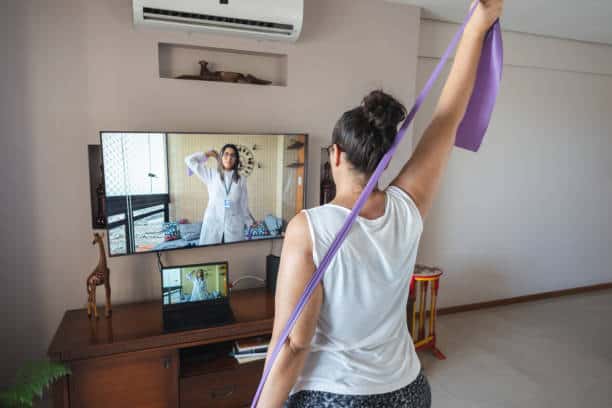
After those two weeks, we progressed to eccentric exercises. Now, eccentric training is where the muscle lengthens under load, and research shows it’s incredibly effective for tendon healing. We used resistance bands, starting with the lightest tension possible. Mark would raise his arm with assistance, then slowly lower it against the resistance.
The progression looked something like this: Week 1-2 (isometrics), Week 3-4 (eccentric focus), Week 5-6 (concentric training), Week 7-8 (functional movement patterns). Each phase built on the previous one, and we never moved forward if pain increased.
The Nutrition Component Nobody Talks About
This is where things get interesting, and honestly, where I see most people fail. You can do all the perfect exercises in the world, but if your body doesn’t have the raw materials for healing, you’re fighting an uphill battle.
Anti-inflammatory nutrition became huge for Mark’s recovery. We focused on omega-3 fatty acids – I’m talking about real sources like wild-caught salmon, not just popping fish oil pills. https://www.rushwalter.com/biblical-nutrition-for-joint-health-what-would-jesus-eat-for-inflammation/ He was eating salmon twice a week, along with walnuts and flaxseeds. The goal was getting his omega-3 to omega-6 ratio closer to 1:4 instead of the typical American ratio of 1:20.
Collagen synthesis was another big focus. Vitamin C isn’t just for preventing scurvy – it’s essential for collagen formation. Mark started his day with a smoothie that included berries, spinach, and a scoop of high-quality collagen powder. We also made sure he was getting adequate protein – about 1.2 grams per kilogram of body weight daily.
Here’s something that surprised me: sleep quality made a massive difference in his recovery speed. https://www.rushwalter.com/biblical-sabbath-rest-why-recovery-days-are-essential-after-50/ Growth hormone, which is crucial for tissue repair, is primarily released during deep sleep stages. Mark was getting maybe 5-6 hours of fragmented sleep before we started working together. We implemented a strict sleep hygiene protocol, and his pain levels dropped noticeably after just two weeks of better sleep.
Movement Patterns and Posture Correction
The biggest “aha moment” in Mark’s recovery came when we addressed his forward head posture and rounded shoulders. https://www.rushwalter.com/lifting-hands-in-prayer-healing-frozen-shoulder-after-50-through-functional-movement/ See, rotator cuff problems rarely happen in isolation. They’re usually the result of years of poor posture and movement compensation.
Most construction workers – heck, most people these days – spend their days with their shoulders rolled forward. This puts the rotator cuff in a chronically lengthened and weakened position. It’s like trying to use a rubber band that’s already stretched to its limit.
We spent significant time on thoracic spine mobility. The thoracic spine needs about 25-35 degrees of extension for optimal shoulder function, but Mark could barely get 15 degrees. We used foam rolling, wall slides, and specific stretches targeting his pectoralis minor and anterior deltoid.
One exercise that made a huge difference was what I call “prone Y-raises.” Mark would lie face-down on an incline bench, arms forming a Y-shape, and lift light weights (we started with 2-pound dumbbells) some folks begin with just their bodyweight. This exercise specifically targets the lower trapezius and serratus anterior – muscles that are often weak in people with rotator cuff problems.
The postural corrections weren’t just about exercise, though. We had to address his work environment. Mark started using a ergonomic tool belt that distributed weight more evenly, and we set reminders on his phone to do posture checks every hour.
The Mind-Body Connection in Healing
This is where the Biblical approach really shines, and it’s something that conventional medicine often misses completely. Our mental and emotional state has a profound impact on physical healing. https://www.rushwalter.com/philippians-413-fitness-finding-strength-when-your-body-feels-weak/ When Jesus healed people, He often addressed their faith first – not because the physical problem wasn’t real, but because belief plays a role in recovery.
Mark was carrying a lot of fear about his shoulder. He’d convinced himself that any pain meant he was making things worse. This fear was actually limiting his progress because he was unconsciously guarding the shoulder, creating more tension and compensation patterns.
We worked on what I call “mindful movement.” Before each exercise, Mark would take a few deep breaths and actually visualize the healing happening in his shoulder. It sounds a bit woo-woo, but there’s solid science behind visualization and its effect on muscle activation and pain perception.
Prayer became part of his routine too. Not just asking for healing, but actually thanking God for his body’s incredible ability to repair itself. Philippians 4:6-7 reminds us not to be anxious but to present our requests to God with thanksgiving. There’s something powerful about shifting from worry to gratitude.
Results and Long-Term Maintenance
After sixteen weeks, Mark’s MRI showed significant improvement in his rotator cuff tear. More importantly, he was pain-free and had returned to full work duties. His orthopedic surgeon was honestly shocked – he’d never seen a partial thickness tear heal that completely without surgical intervention.
But here’s the thing – this wasn’t a quick fix, and it required Mark to change some fundamental habits. The exercises we did in those sixteen weeks became part of his daily routine, not just a temporary rehab program. He still does his shoulder maintenance exercises every morning, almost five years later.
The key to long-term success was understanding that rotator cuff health isn’t about fixing a problem once – it’s about creating an environment in your body where problems are less likely to occur. That means consistent strength training, proper nutrition, adequate sleep, and stress management.
I’ve used variations of this approach with dozens of clients since then, and I’d estimate about 80% avoid surgery completely. The ones who don’t succeed are usually the ones who try to rush the process or skip the boring foundation work.
Remember, our bodies are fearfully and wonderfully made (Psalm 139:14). Sometimes the best approach isn’t the most aggressive one – it’s the one that works with our body’s natural healing mechanisms rather than against them. Patience, consistency, and faith in the process can accomplish what seems impossible.
I’ve worked with countless friends and clients who have experienced various lower and upper body challenges and injuries to help them recover without extensive surgery. Sometimes surgery is necessary and appropriate, then we rehab accordingly afterwards to enhance wellness rewards. When you would like for me to develop a customized and monitored fitness program, please email me and we can discuss healthy steps and options. I look forward to helping you grow stronger for life.
Thank you for reading this fitness blog. I hope you enjoy healthy day, Walter