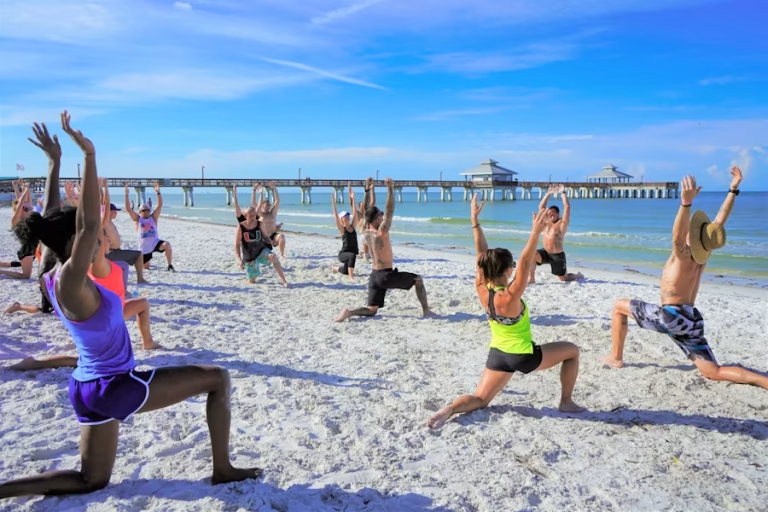
Barefoot Benefits: Fitness over 50 Fun

Let me tell you something that’s gonna sound completely crazy – some of the best fitness breakthroughs I’ve witnessed in my thirty-plus years of training folks have happened when people kicked off their shoes. https://www.rushwalter.com/natural-movement-strength-training-for-complete-beginners/ I’m talking about clients in their fifties, sixties, and beyond who thought their balance was shot, their feet were done for, and their best athletic days were behind them.
Boy, were they wrong.
My “Aha” Moment with Barefoot Training
About twelve years ago, I had this client named Margaret – sweet lady, maybe fifty-eight at the time – who came to me because she kept falling. Not dramatic tumbles, mind you, but those little stumbles that scared the heck out of her. She’d trip over carpet edges, wobble getting out of chairs, you know the drill.
Margaret showed up to our first session wearing these massive, cushioned athletic shoes that looked like they could survive a moon landing. When I asked her to do a simple balance exercise – just standing on one foot for ten seconds – she lasted maybe three seconds before grabbing onto something. Her feet were encased in so much padding and support that they’d basically forgotten how to do their job.
That’s when I made what felt like a radical suggestion at the time. “Margaret,” I said, “what if we tried this without the shoes?” She looked at me like I’d suggested we workout naked. But after some coaxing, she slipped off those bulky trainers and tried the balance exercise again in her socks.
The difference was immediate. Not perfect, mind you, but she could suddenly feel the ground beneath her feet. Her toes started spreading and gripping naturally, her ankles made tiny adjustments she didn’t even realize were happening. Within three weeks of barefoot training, Margaret was standing on one foot for thirty seconds solid.
The Science Behind Happy Feet
Here’s what I learned through years of watching this phenomenon play out: our feet have about 200,000 nerve endings packed into them. That’s more sensory input than almost anywhere else on our body. When we stuff our feet into thick-soled shoes all day, we’re essentially putting mittens on them and expecting them to play piano.
Your feet are designed to be information gathering machines. Every little bump, texture change, and surface variation sends signals up to your brain about where you are in space. This is called proprioception – basically your body’s GPS system. After fifty, this system naturally starts to decline, but thick-soled shoes accelerate that decline dramatically.
I remember reading a study years back that showed how barefoot walking improved balance in older adults by nearly 40% after just eight weeks. The researchers found that when people could actually feel the ground, their ankle stability improved, their core muscles engaged more effectively, and their overall confidence in movement increased.
But here’s the kicker – it’s not just about balance. Going barefoot strengthens all those tiny muscles in your feet that modern shoes have made lazy. These muscles are crucial for everything from walking efficiency to preventing knee and hip pain.
The Barefoot Training Evolution in My Gym
When I first started incorporating barefoot exercises into my programs, I’ll be honest, I got some weird looks. This was back when minimalist shoes were just becoming a thing, and the idea of training seniors without footwear seemed pretty out there.
My breakthrough came with a gentleman named Robert, a retired accountant who’d been dealing with plantar fasciitis for two years. He’d tried everything – custom orthotics, night splints, even those painful cortisone shots. Nothing worked. His podiatrist had basically told him to avoid walking barefoot at all costs.
I suggested we try the opposite approach. We started with just five minutes of barefoot movement at the end of each session – simple exercises like toe spreading, calf raises, and slow walking on different textures. Within six weeks, Robert’s plantar fasciitis pain had decreased by about 70%. His foot strength had improved so much that his feet were finally able to support themselves properly.
That’s when I realized something important: we’d been treating symptoms instead of causes for decades. Instead of strengthening feet, we’d been supporting them into weakness.
Practical Barefoot Exercises That Actually Work
The beauty of barefoot training for folks over fifty is that you don’t need fancy equipment or complicated routines. Some of my most effective exercises can be done while sitting in your favorite chair or standing in the kitchen.
Start with toe spreading exercises. Seriously, it sounds silly, but try spreading your toes as wide as possible and holding for ten seconds. Most people over fifty can barely separate their toes at all when they first try this. Years of narrow shoes have essentially glued their toes together. But after a few weeks of practice, you’ll see dramatic improvements in toe mobility and foot strength.
Balance challenges are where barefoot training really shines. https://www.rushwalter.com/how-to-create-your-own-natural-movement-training-program/ Standing on one foot becomes a completely different exercise when you can feel the ground. Try standing on different surfaces – a folded towel, a pillow, or even just shifting between hard floor and carpet. Your feet will start making micro-adjustments that improve your stability in ways that thick-soled shoes never could.
I love having clients do heel-to-toe walking barefoot. It’s like a sobriety test, but for your balance system. Start by walking in a straight line, placing one foot directly in front of the other. In shoes, this exercise is challenging. Barefoot, it becomes a full-body coordination fun workout that engages everything from your toes to your core.
The Unexpected Benefits I Never Saw Coming
A few years into incorporating barefoot training regularly, I started noticing changes in my clients that went way beyond what I expected. https://www.rushwalter.com/barefoot-training-guide-strengthen-feet-for-natural-movement/ People weren’t just more balanced – they were moving with more confidence, sleeping better, and reporting less joint pain throughout their bodies.
Sarah, a client in her early sixties, mentioned that her knee pain had virtually disappeared after three months of barefoot exercises. We hadn’t even been targeting her knees specifically, but strengthening her feet had created better alignment all the way up her kinetic chain. Her stronger feet led to better ankle stability, which improved her knee tracking, which took pressure off her hips.
This interconnectedness of the body became one of my favorite aspects of barefoot training. When you strengthen the foundation – your feet – everything else works better. It’s like fixing the foundation of a house and watching all the other structural problems resolve themselves.
Common Mistakes and How to Avoid Them
The biggest mistake I see people make is going too hard, too fast. After decades of wearing supportive shoes, your feet need time to adapt to their new job requirements. I had one enthusiastic client who decided to go on a two-mile barefoot hike after just one week of training. He ended up with sore calves and frustrated because his feet weren’t “strong enough yet.”
Start with just ten to fifteen minutes of barefoot time per day. Your foot muscles need to gradually build strength, just like any other muscle group. The transition period usually takes about six to eight weeks before you really start feeling the benefits.
Another common error is focusing only on smooth surfaces. Your feet need to experience different textures to fully develop their sensory capabilities. I have clients practice on carpet, hardwood, grass, and even gravel (carefully, of course). Each surface challenges your feet in different ways and builds more comprehensive foot strength.
Weather can be tricky too. Obviously, you’re not going barefoot in the snow, but don’t let cold floors stop you from training. https://www.rushwalter.com/how-barefoot-training-improves-natural-movement-strength/ Some of my best barefoot sessions happen on dew covered grass in the morning. The temperature actually heightens your sensory awareness.
Making Barefoot Training Social and Fun
One thing that surprised me over the years was how much people enjoyed barefoot training once they got past the initial awkwardness. https://www.rushwalter.com/barefoot-training-physical-and-mental-benefits/ There’s something almost childlike about taking your shoes off and moving around freely. I started organizing “barefoot balance challenges” where clients would compete to see who could stand on one foot the longest or walk the furthest heel-to-toe.
These little competitions brought out people’s playful side in a way that traditional gym exercises rarely did. Margaret, the client I mentioned earlier, became absolutely obsessed with improving her single-leg stand time. She’d practice at home and come in each week excited to show me her progress.
Group barefoot classes can become a popular offering. There’s something equalizing about everyone having their shoes off – it removes some of the intimidation factor that can come with traditional fitness environments. Plus, people could easily see each other’s progress, which created natural motivation and support.
The Long-Term Payoff
After watching clients go through barefoot training progressions, I can tell you the long-term benefits are remarkable. People maintain their balance improvements, their foot pain typically stays resolved, and their overall movement quality continues to improve.
Most importantly, barefoot training gives people confidence in their bodies again. When you know your feet can handle uneven surfaces and your balance is solid, you’re more likely to stay active. You’ll take that hiking trip, play with grandkids on the playground, or navigate those tricky bathroom tiles at night without fear.
The investment in barefoot training time pays dividends for years. It’s one of those simple interventions that can dramatically improve quality of life without requiring expensive equipment or complicated protocols. Just you, your feet, and a willingness to rediscover what they’re actually capable of doing.
Trust me, your feet are smarter than you think – they just need a chance to remember their job. I smile each time I have the opportunity to go barefoot, and I love sharing the outstanding benefits of walking barefoot. Enjoy the outdoors barefooted and you will smile.
Thanks for reading this fitness blog, I hope you enjoy a healthy barefoot day, Walter